Indigenous dispossession and ancestral memory
The Power of the Dog (Thomas Savage Edition)Indigenous dispossession and ancestral memory form a political and emotional counterpoint in the account of Edward Nappo and his son. The family’s inherited connection to their northern homeland persists through stories, remembered places, and the son’s hope of seeing his grandfather’s grave; their attempt to return, however, is checked by both reservation controls and Phil Burbank’s refusal to let them pass a gate. The journey exposes the distance between remembering a homeland and being permitted to reach it, while showing how stories preserve knowledge that removal cannot simply erase.
Removal and the Rules of Confinement
The account places the Nappos’ journey against the forced removal of the valley’s Indigenous people. As the last families were sent to the reservation, the government no longer treated treaty obligations as meaningful restraints: the land had become too valuable, while officials had less reason to fear Indigenous resistance and more reason to consider the preferences of white voters. The people driven south traveled in worn buggies and on old horses. Edward Nappo had seen them from the high seat of his Model T, and his thoughts followed them to the dry country of southern Idaho, where harsh winters, few trees, and sulfur-smelling water marked the place to which they had been sent.
The reservation’s rules made confinement a practical condition of daily life. Liquor could not be sold or consumed there, and residents could not leave without a permit, granted only for a pressing reason. The government’s explanation for the liquor rule relied on a racial generalization, while the permit system assumed that Indigenous people had nowhere to go and no one to shelter them. The rules did more than define conduct within a boundary: together, they restricted movement beyond it and made return to ancestral country dependent on official permission. Edward’s decision not to report his plan to the agent reflects his awareness that seeking permission could itself create an obstacle.
Stories as Inherited Knowledge
Edward’s own claim to the northern country came through both family history and remembered landscape. His father had been a chief, and Edward sometimes thought of himself as chief in his dreams. He told his son about land the boy had never seen, since his mother, Jennie, had been pregnant in the buggy when the family was driven south. Jennie, who tanned deer hides and made gloves and moccasins, worried that these accounts would make the boy sad. Edward nevertheless understood stories as something the child needed in order to grow and imagine a future.
The stories made ancestral memory concrete rather than abstract. Edward explained thunder through the imagined sound of buffalo hooves in the sky and lightning through the flash of their eyes. When the boy was twelve, a severe winter brought blizzards, extreme cold, and the deaths of some elders. During the cow’s illness, Edward and his son tended a fire in the shed while he described the northern country: fields of purple lupine, birds calling at twilight, storm clouds gathering above the mountains, and water springing from rock. He told the boy that the land had belonged to their people and that his grandfather had been chief there. The boy’s wish to run away, and his vision of his grandfather’s grave, show how the stories had given the absent place a presence in his mind.
The Journey North
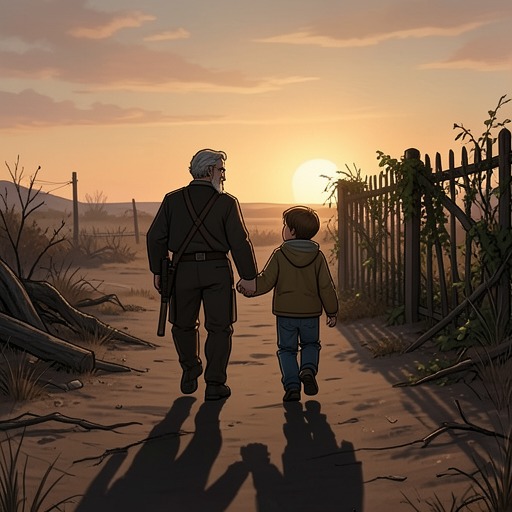
Edward had made a private bargain with his son: if the cow lived, they would try to go north. When summer came, Jennie packed food, including canned beans, canned corned beef from Argentina, and hard soda crackers. Edward and the boy left before daybreak without informing the agent. Their preparations were modest and constrained by what they possessed. Because their horse was old, they usually walked, climbing into the cart when dust on the road signaled an approaching automobile. The boy carried his school shoes in the cart and wore loose, faded overalls; Edward wore a checked shirt and an uncreased black cowboy hat.
As they traveled, the country seemed strange to Edward, perhaps because on the earlier journey south he had not wanted to look closely at it. His son was not thinking about the mother left behind with the cow; he was thinking about the mountains. Edward, too, measured the route against the landscape he had described for years: dark timber rising toward the snowline, shaded rocks and ravines, springs, and the quiet of the pines. Their shared attention to the mountains turns the journey into more than an attempt to reach a destination. It is also a test of whether a place transmitted through memory can be encountered in person. The expected route falters when they come to a gate Edward cannot remember.
The Gate and the Refusal
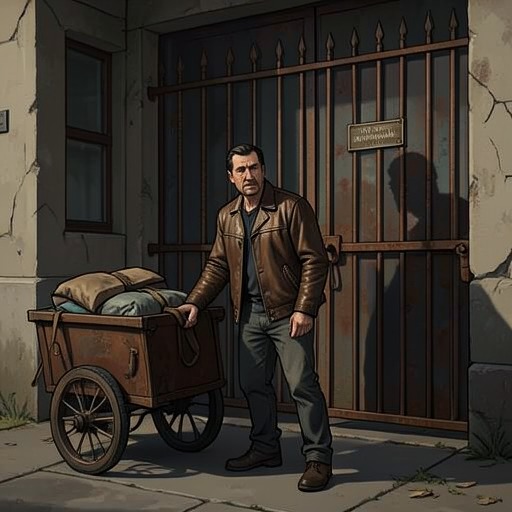
At the gate, Edward invokes his father’s standing as chief, hoping that the family name might open a way through. Phil Burbank does not accept that claim as a reason to let them continue. He tells Edward and his son to turn back, rejects the offer of gloves, and insists that he does not take bribes. Edward explains that they would stay only a few days so the horse could rest, but Phil refuses. The encounter makes the difference between inherited authority and present control stark: Edward’s father had been chief, yet Edward cannot secure even a short rest for the horse on the route toward his father’s country.
The return journey is two hundred miles to the reservation. Edward worries about whether the old horse will survive the trip and cannot look at his son as he explains that he could do nothing. He offers the boy one remaining consolation: they had seen the mountains, the mountains of his father. The boy’s cap slips over his forehead as they turn back. The detail does not resolve the loss; it marks the smallness of what the journey has achieved beside the distance they must retrace. They have approached the remembered homeland, but neither the family story nor Edward’s identity can overrule the barrier before them.
Phil’s response is also shaped by a broader refusal to take Indigenous claims seriously. He dismisses romantic accounts of Indigenous life and voices stereotypes about work, horses, theft, and the people who had once camped outside Herndon. In this context, the gate is not merely a physical interruption. Edward and his son encounter a white rancher who controls passage and treats their claim to ancestral connection as irrelevant. The scene distinguishes the government’s reservation restrictions from Phil’s immediate refusal, while showing how both limit the family’s movement in practice.
Recognition Without Restoration
Rose Gordon Burbank later recognizes the significance of the travelers’ return. After seeing the cart on the road, she learns that the boy is the son of a chief and understands that a white man’s decision to turn his father back may remain with him for life. She runs after the Nappos despite wearing shoes unsuited to walking, tells Edward that her husband knew his father, and invites him and his son to camp with them. Edward accepts, and the boy looks at his father with pride as he fixes his cap. This welcome offers a sharply different response from Phil’s refusal, but it does not undo the failed attempt to reach the ancestral land or remove the controls that sent the family away.
The episode holds memory and dispossession together without presenting remembrance as a substitute for access. Edward’s stories give his son a landscape, a family history, and an image of the grandfather whose grave lies in the north. The journey allows the boy to see the mountains, but the gate turns that partial encounter into a return south. Rose’s recognition grants the father and son a measure of welcome; Phil’s authority over the passage remains the decisive limit. Ancestral memory survives in the telling and in the boy’s response, while the land itself remains beyond their reach.